
The New Face of Debt Collection
Gone are the days when debt collection was just phone calls and letters. Today, it's digital. Debt collectors drive traffic to slick web portals designed to look helpful and convenient. But beneath the surface, these portals often hide a legal trap designed to strip you of your rights under the Fair Debt Collection Practices Act (FDCPA).
The Trap: "Click Here to Dispute"
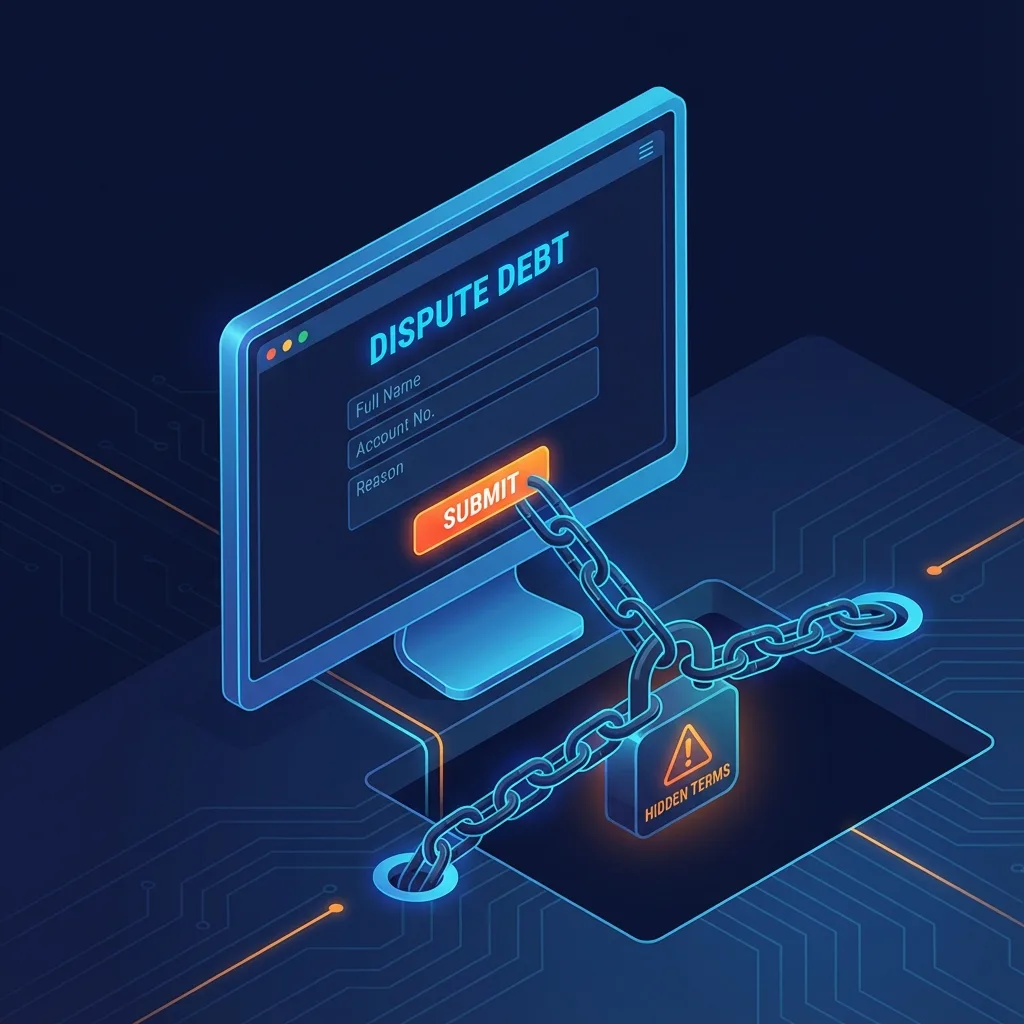
It starts simply: you receive a letter or email with a link to "Manage Your Account" or "Dispute This Debt." You visit the site, looking for a way to exercise your federal right to dispute the debt. But before you can send a message or view details, you hit a wall.
A pop-up appears: "To proceed, please agree to our Terms of Use."
Most people click "I Agree" without reading. That is exactly what they want. By checking that box, you may be unknowingly waiving the very protections you're trying to exercise.
What You Are Really Agreeing To
These "Terms of Use" aren't standard website boilerplate. They are often weaponized legal waivers. Hidden in the fine print, you might find:
- TCPA Consent: You agree to receive robocalls and automated texts to your cell phone—permission that overrides previous Do-Not-Call requests.
- Mandatory Arbitration: You waive your right to sue them in court or join a class action lawsuit if they break the law.
- Electronic Service: You agree to receive all future legal notices via email, meaning you might miss a lawsuit summons sent to your spam folder.
- Surveillance: You consent to them tracking your location and device data.
Why This Violates the FDCPA
Under 15 U.S.C. § 1692g(b) of the FDCPA, consumers have an absolute right to dispute a debt within 30 days. The law does not say you must sign a contract or agree to invasive tracking to exercise that right.
Courts have increasingly scrutinized these "digital barriers." In Lavallee v. Med-1 Solutions (7th Cir. 2019), the court ruled that key information must be actively conveyed to the consumer—it cannot be hidden behind a link or a barrier that requires extra steps to access. Conditioning your statutory rights on the acceptance of new, harmful terms is a deceptive practice that may violate § 1692e (False and Misleading Representations) and § 1692f (Unfair Practices).
How to Dispute Safely (Without the Trap)
If you encounter a debt collection portal that demands you "Agree" to terms before disputing:
- Stop. Do not click "I Agree."
- Close the tab. Do not engage with the digital portal.
- Send a Certified Letter. The safest way to dispute a debt is still the old-fashioned way. Send a written dispute letter via Certified Mail Return Receipt Requested. This creates a paper trail they cannot deny and avoids all digital waivers.
We Fight Digital Harassment
If a debt collector has tricked you into waiving your rights or blocked you from disputing a debt unless you agreed to their terms, you may have a claim for damages. At Hyslip Legal, we specialize in holding digital debt collectors accountable.
Learn more about your FDCPA rights or contact us today for a free consultation.