
How to Dispute Inaccurate Credit Reports: A Step-by-Step Legal Guide
You work hard to maintain good financial standing, yet a single error on your credit report can treat you like a high-risk borrower. You shouldn't be denied a mortgage, a car loan, or a job because a credit bureau is too lazy to verify the facts.
When Equifax, Experian, or TransUnion refuse to correct inaccurate information, they are violating your rights under federal law. The Fair Credit Reporting Act (FCRA) requires them to conduct a reasonable investigation, but they often rely on automated systems to dismiss valid disputes. Hyslip Legal forces these companies to fix your report and pay for the damage they caused.
Contact us today for a free case review—we handle the dispute process for you, and we only get paid when we win.

In This Guide
Introduction
To a credit bureau like Equifax, Experian, or TransUnion, your credit file is nothing more than a stream of data points to be sold for profit. To you, that file determines where your family sleeps at night, what car you drive, and whether you can build a future.
The contrast is infuriating. When a data entry clerk makes a keystroke error, they simply move on to the next file. For you, that simple mistake becomes a rejected mortgage application. It becomes the humiliation of a declined credit card at a grocery store or a rescinded offer from a potential employer who flagged a background check error. You suffer the consequences of their negligence.
You pay your bills on time. You meet every financial obligation. Yet your score plummets because a stranger merged your file with someone else’s, or a lender failed to update a balance. It feels like you are screaming into a void. Often, these reporting errors are accompanied by other forms of consumer abuse; you may find yourself needing to know how to sue for spam text messages or how to stop unwanted robocalls from collectors chasing debts that aren't even yours.
You do not have to accept a broken credit report. You do not have to rely on generic forums or Google searches to fight a billion-dollar corporation. The Fair Credit Reporting Act (FCRA) gives you the power to force corrections. More importantly, it gives you the right to demand compensation when they refuse to listen.
This guide explains how to dispute effectively, how to avoid the automated traps bureaus set for consumers, and when to escalate your fight to a lawsuit. If you are tired of the runaround, our team is ready to help with a free case review.
What Is the FCRA and Why Does It Matter?
Your credit report is not just a list of numbers. It is your financial reputation. It determines where you live, what you drive, and whether you get hired.
The Fair Credit Reporting Act (FCRA), codified at 15 U.S.C. § 1681, is the federal law designed to protect that reputation. Before this law existed, credit bureaus could collect secret files on Americans with zero accountability. If they got it wrong, you had no way to fix it. Today, the FCRA gives you the right to see your file, the right to dispute errors, and the right to sue when they refuse to correct mistakes.
This law applies to the "Big Three" bureaus—Equifax, Experian, and TransUnion—as well as specialty agencies that generate background checks for landlords and employers. It turns the power dynamic around. You are not begging them to fix an error. You are demanding compliance with federal law.
The "Maximum Possible Accuracy" Standard
Credit bureaus often act like they are merely libraries, passively storing whatever books the banks give them. They claim they aren't responsible if the information is wrong. Federal law says otherwise.
Under 15 U.S.C. § 1681e(b), consumer reporting agencies must follow "reasonable procedures to assure maximum possible accuracy" of the information concerning the individual about whom the report relates. Note the standard: maximum possible accuracy. Not "mostly accurate." Not "accurate enough."
Important: The Burden is on Them
When a bureau includes mixed files (merging your data with a stranger's) or reports a debt you already paid as "delinquent," they fail this standard. They cannot hide behind the excuse that "the bank told us so." If they sell your data, they are responsible for its truth.
Who Is Responsible? Furnishers vs. CRAs
To fix a credit report error, you need to understand who broke the law. The FCRA divides responsibility between two main groups:
- The Furnishers: These are the companies that send data to the bureaus. This includes credit card issuers, mortgage lenders, debt collectors, and auto finance companies. They have a legal obligation to investigate disputes you send them.
- The Credit Reporting Agencies (CRAs): These are the companies that compile and sell the reports. This includes the Big Three and background check companies. They must conduct a "reasonable reinvestigation" when you dispute an item.
When you file a dispute, the CRA often sends a two-digit code to the furnisher, who does a quick automated check and says "verified." No human looks at your evidence. This automated rubber-stamping is often illegal. Our legal insights show that this failure to investigate is the most common reason we sue.
When Errors Cost You a Job
The stakes are highest when the FCRA applies to employment screening. A potential employer may order a background check that falsely lists a criminal record or a poor credit history belonging to someone else. Because of these errors, you lose the job offer before you even get a chance to explain.
The FCRA has strict rules for these situations. Employers must notify you before taking adverse action, and the background check company must ensure strict accuracy regarding public records. If you lost a job opportunity because of a sloppy report, you have specific rights to sue for lost wages. See our guide on how to handle false background checks for the specific steps to take immediately.
Federal law does not require you to pay for their mistakes. If they damage your reputation, you have the right to a free case review to determine if you can recover damages.
Compensation You Can Recover for Errors
Fixing the error is only half the battle. When a credit bureau or background check company violates your rights, they do not just owe you a correction. They owe you money.
Most consumers believe their only goal is to get the inaccurate information deleted. While restoring your good name is the priority, federal law recognizes that the damage has already been done. You cannot pay your bills with an apology, and you cannot get back the time you spent fighting to prove who you are. Under the Fair Credit Reporting Act (FCRA), the burden of these mistakes shifts back to the companies that made them. We file lawsuits to recover specific types of damages on your behalf.
Statutory Damages: The Penalty for Breaking the Law
You do not need to prove you lost a specific dollar amount to hold them accountable. If a consumer reporting agency willfully violates your rights—for example, by failing to investigate your dispute—federal law (15 U.S.C. § 1681n) provides for statutory damages ranging from $100 to $1,000 per violation. This is a penalty they must pay simply for breaking the law, regardless of your personal financial loss.
Actual Damages: Recovering Your Financial Losses
If the error cost you money, you are entitled to every penny back. Actual damages cover the tangible financial harm caused by the incorrect report. This often includes:
- Denied Credit — Compensation for loans or credit cards you were refused.
- Higher Interest Rates — The difference between the rate you deserved and the subprime rate you were forced to pay.
- Lost Employment — Wages lost if a potential employer rescinded a job offer due to a background check error.
- Legal Defense Costs — If a reporting error led to a collection lawsuit, you can recover the costs of your defense against junk debt buyers.
Emotional Distress
The courts recognize that a ruined credit score causes more than just financial problems. It causes anxiety, humiliation, and sleepless nights. It strains marriages and ruins reputations. We regularly recover compensation for the emotional distress caused by these violations. You should not have to live with the shame of a financial history that does not belong to you.
Punitive Damages
When a defendant acts with "willful disregard" for the law—meaning they knew their obligations and chose to ignore them—the court can award punitive damages. These are not designed to compensate you, but to punish the defendant. Punitive awards can be substantial, serving as a warning to the industry that ignoring consumer disputes is not a valid business model.
Important: You Pay No Out-of-Pocket Fees
The FCRA includes a "fee-shifting" provision. This means that if we win your case, the defendant must pay your attorney’s fees and litigation costs. This structure allows Hyslip Legal to represent you with no upfront cost and no financial obligation if we do not recover for you.
Our goal is to ensure you are fully compensated for every aspect of the harm done to you. For more detailed explanations of these legal concepts, you can explore our legal insights library.
Common Violations We Fight
The credit bureaus—Equifax, Experian, and TransUnion—process billions of data points every day. They claim to be accurate. They aren't. They prioritize speed and profit over truth, and your financial life pays the price.
When these companies get it wrong, they often treat you like a nuisance rather than a victim. They use automated systems to verify disputes, meaning a real human being rarely looks at your evidence. At Hyslip Legal, we force them to look. Here are the specific violations we fight every day.
Mixed Files
This is one of the most damaging errors a consumer can face. A "mixed file" occurs when a credit bureau merges your credit history with someone else’s—often a relative with a similar name or a stranger who shares 7 out of 9 digits of your Social Security number.
Suddenly, a stranger’s bankruptcy, foreclosure, or tax lien appears on your report. You apply for a mortgage and get denied instantly. The bureau may claim the debt is "verified" because their loose matching algorithms say so. This is negligence. You are not responsible for a stranger's bad luck, and federal law demands that bureaus maintain "maximum possible accuracy."
Identity Theft Accounts
You did everything right. You filed the police report. You sent the FTC affidavit. Yet the fraudulent account remains on your report. Creditors and bureaus often side with the fraudster, assuming the victim is simply trying to dodge a legitimate debt.
Under the Fair Credit Reporting Act (FCRA), specifically 15 U.S.C. § 1681c-2, bureaus must block information resulting from identity theft within four business days of receiving your report. If they fail to do so, they are breaking the law. For a detailed breakdown of what you should have done before calling us, review our guide on the first steps after identity theft.
Zombie Debt (Re-Aging)
Debt buyers often purchase old, uncollectible debts for pennies on the dollar. These debts may be past the state statute of limitations to sue or the federal 7-year credit reporting limit for negative information. To squeeze money out of you, unscrupulous collectors may illegally "re-age" the debt by reporting a new "date of last activity."
This tricks the credit bureaus into treating an ancient debt as a fresh delinquency, tanking your credit score. This is a dual violation of the FCRA and the FDCPA. If you are being targeted by these predatory tactics, read more about junk debt buyer lawsuits.
Important: The 5-Day Notice Rule
If you successfully dispute an error and get it removed, the bureau cannot just put it back on later without warning. Under 15 U.S.C. § 1681i(a)(5)(B), they must notify you in writing within 5 business days if they re-insert previously deleted information. They almost never do this. If a deleted debt reappears without notice, you can sue.
Failure to Mark as Disputed
When you tell a debt collector, "I do not owe this," they have a legal obligation to communicate that dispute to the credit bureaus. If your credit report continues to list the debt without a notation that it is "disputed," the collector is providing false information. This is a clear violation of the Fair Debt Collection Practices Act (FDCPA).
Inaccurate Status Reporting
We frequently see cases where a consumer settled a debt or paid it in full, yet the credit report still lists the status as "Charge-Off" or "Past Due" with a balance owing. This artificially suppresses your credit score. If you paid it, the report must reflect a zero balance. Anything less is defamation of your financial character.
You don't have to fight these giant corporations alone. Check our reviews to see how we've helped others, or contact us to get help now. Your case review is completely free, and we only get paid when we recover money for you.
Follow These Steps to Build Your Case
The credit bureaus—Equifax, Experian, and TransUnion—count on you making mistakes. They have designed a dispute system that encourages consumers to take shortcuts, click quick buttons, and provide insufficient evidence.
To force these multi-billion dollar corporations to pay for their errors, you must treat your dispute as the first step of a federal lawsuit. You are not just asking for a correction; you are building a paper trail of evidence that a judge and jury may one day examine. If you miss a step, the bureaus can claim they were never properly notified, shielding them from liability.
Follow this strict protocol to preserve your rights under the Fair Credit Reporting Act (FCRA).
Get Your Official Reports, Not Summaries
Do not rely on third-party monitoring apps like Credit Karma or banking dashboards. These sites provide "educational scores" and summarized data, not the legal record of your credit file. You need the raw data to see exactly how the error is being reported.
Go to AnnualCreditReport.com. This is the only federally authorized source for free credit reports. Download and save the PDF versions of your reports from all three major bureaus. You need to see the specific "Date of First Delinquency," the exact account status codes, and the payment history grid.
Identify Every Inaccuracy
Comb through the reports line by line. You are looking for more than just accounts that don't belong to you. Look for:
- Incorrect Balances: Is the debt inflated?
- Wrong Status: Is a closed account listed as open?
- Zombie Debt: Is a debt past the statute of limitations being re-aged?
- Mixed Files: Is someone else's address or employer listed on your file?
If you find accounts that are purely the result of identity theft, the process changes slightly. Learn more in our detailed guide to removing fraudulent accounts.
WARNING: The Online Portal Trap
Never dispute a credit error through the bureau's website or app. When you click "I Agree" to submit an online dispute, you are often accepting terms and conditions that force you into binding arbitration.
This waives your Constitutional right to a jury trial. It keeps your case out of the public court system and protects the bureaus from class actions. Always dispute by mail.
Draft a Specific Dispute Letter
Your letter must be clear, specific, and factual. Do not use generic "template" letters found on credit repair forums; the bureaus use software to identify and discard these as "frivolous."
List the exact account name and number. State clearly why the information is wrong (e.g., "This account was settled in full on [Date], but you report a balance of $500"). Demand that they investigate and correct the error. Documentation is your only defense. Similar to the process required when documenting workplace violations, building a credit damage case requires you to create an irrefutable timeline of events.
Send via Certified Mail with Return Receipt
This is the most critical step. You must prove the bureau received your dispute. Send your letter via USPS Certified Mail with a Return Receipt Requested (the "Green Card").
When the bureau signs for the letter, the clock starts. Without this proof, they can—and often do—claim they never received your dispute, allowing them to ignore the statutory deadlines without penalty.
Wait 30 Days for the Investigation
Under 15 U.S.C. § 1681i, the credit reporting agencies generally have 30 days to investigate your dispute. They must contact the furnisher (the bank or collector), verify the information, and send you the results.
If they verify false information as accurate, or if they fail to respond within the deadline, they have violated the law. This is when you contact Hyslip Legal.
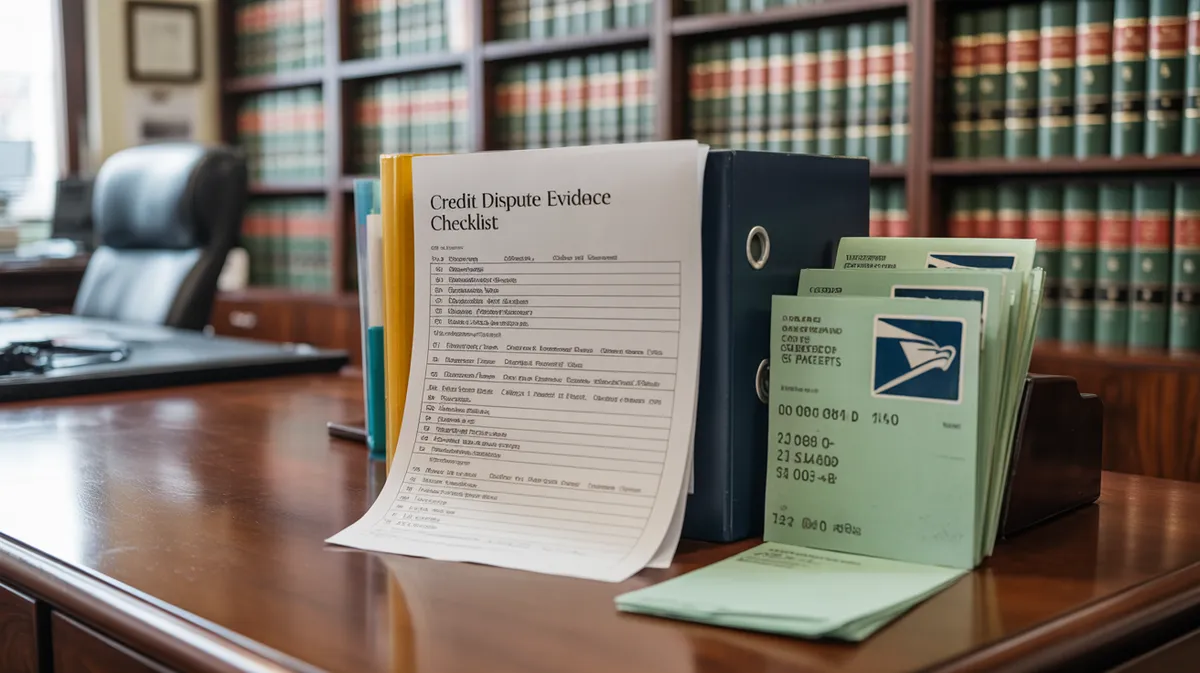
The Dispute Evidence Checklist
To win a settlement or judgment, we need to prove the damage caused by the bureau's negligence. Keep a physical or digital folder containing every item on this list. Do not throw anything away.
Why You Need Hyslip Legal
They ignore your letters. They don't ignore our lawsuits.
Most consumers try to fix these problems on their own first. You send a dispute letter. You upload documents. You wait 30 days. Then you get a generic form letter saying "verified." Nothing changes. It feels like you are shouting at a wall because, in a way, you are.
Here is the reality the credit bureaus won't admit: no human being actually read your dispute. They use an automated system called e-OSCAR to scan your letter for keywords, assign a two-digit code, and automatically reject your claim. It is a calculated business decision. It is cheaper for them to ignore you than to hire staff to investigate your claim.
The "Dispute Trap"
Automated portals often strip away your rights by forcing you to agree to arbitration or limited terms. Learn more about how these systems work in our guide to online dispute traps.
Hyslip Legal changes the equation. When we file a lawsuit, your file is pulled out of that automated pile. It lands on the desk of a real human being—usually a legal compliance officer or a defense attorney. They look at the evidence. They see the violation. They know that if they don't fix it and pay for the damage they caused, a federal jury could make them pay even more.
We don't just want your report corrected. We demand compensation. Under federal law, you are entitled to damages for the harm they caused. Did a wrong background check cost you a job with a potential employer? Did a drop in your credit score kill your mortgage application? We sue for those specific financial losses, plus statutory damages for the violation itself.
Our track record speaks for itself. We have recovered millions for consumers against the biggest banks, credit bureaus, and background check companies. You can read our reviews to see how we have helped people in your exact situation—people who were ignored, harassed, and rejected until we stepped in to fight for them.
Best of all, this costs you nothing out of pocket. Federal consumer protection laws include a "fee-shifting" provision. This means the defendant—the company that broke the law—has to pay our legal fees. You never pay a retainer. You have no financial obligation unless we recover money for you.
Frequently Asked Questions
How long does the credit dispute process take?
Under the Fair Credit Reporting Act (15 U.S.C. § 1681i), credit bureaus generally have 30 days to investigate your dispute once they receive it. They must notify you of the results within five business days of completing that investigation. If you submit additional information during that 30-day window, the deadline may extend to 45 days. If they fail to respond within these statutory timeframes, they are breaking the law.
Is it better to dispute online or by mail?
While online portals are faster, we strongly recommend disputing by certified mail. Online dispute systems often force you to accept terms that limit your legal rights, such as waiving your right to sue in court. Furthermore, online portals rarely allow you to upload sufficient evidence. Sending a letter via certified mail creates a physical paper trail that proves exactly what you sent and when they received it. This evidence is vital if we need to file a lawsuit later.
Will disputing an error hurt my credit score?
No. Filing a dispute does not lower your credit score. In fact, the credit bureau is required to mark the account as "disputed" while they investigate, which signals to lenders that the information may not be accurate. If the dispute is successful and negative information is removed, your score typically improves. You should never fear retaliation for exercising your rights.
What happens if the credit bureau "verifies" the false information?
This is a common tactic. Bureaus often use automated systems to "verify" debts without actually looking at your documents. If they confirm false information after you have provided proof it is wrong, they have willfully violated the FCRA. At this stage, sending another letter rarely helps. This is when you contact Hyslip Legal to sue them for damages.
Can I get compensation if my score dropped?
Yes. If a credit reporting error caused you financial harm—such as being denied a mortgage, receiving a higher interest rate on a car loan, or being rejected by a potential employer—you can sue for actual damages. You may also be entitled to statutory damages ranging from $100 to $1,000 per violation, plus punitive damages if the bureau's conduct was willful.
Do I need a lawyer to start a dispute?
You can send the initial dispute letter yourself. However, if the credit bureaus ignore you or refuse to correct the error, you need a consumer protection attorney. We know how to force them to comply. Because the law requires the defendants to pay your legal fees if you win, you can hire us with no out-of-pocket obligation.