
Stop Unwanted Robocalls and Telemarketing Harassment
How many times did your phone ring today with a number you didn't recognize?
It isn't just an annoyance—it is often a violation of federal law. Robocallers and aggressive telemarketers treat your phone line like their property, disrupting your work and family time with automated messages and spoofed numbers. You did not consent to this harassment, and you do not have to accept it. Under the Telephone Consumer Protection Act (TCPA), each illegal call could be worth $500 to $1,500 in compensation to you.
Hyslip Legal stops the harassment by suing the companies responsible. We make them pay for every violation. Contact us today for a free consultation to see if you have a case.

In This Guide
How Many Times Did Your Phone Ring Today?
Your phone buzzes. You check the screen. "Scam Likely" again. You decline the call, but ten minutes later, it rings again.
This happens during dinner. It happens while you are at work. This isn't just a nuisance. It is a violation of federal law. Under the Telephone Consumer Protection Act (TCPA), this harassment is illegal. You do not have to change your number to make it stop. You need to change who holds the power.
When companies ignore the law, Hyslip Legal makes them pay. We turn their illegal behavior into your compensation. Whether you need to sue for spam text messages or stop a collector from calling your employer, we handle the fight. If these calls stem from identity theft, we can even help you remove fraudulent accounts from your credit history. Get a free case review today with no obligation.
Steps to Take Right Now
Most consumers react to harassment by blocking the number. That stops the noise, but it also destroys your evidence. To build a winning case, you need to let them dig their own grave.
Blocking a number is a temporary band-aid. The debt collectors and telemarketers simply switch to a new spoofed number and start over. A lawsuit is the only permanent cure. Follow this timeline to turn their harassment into your compensation.
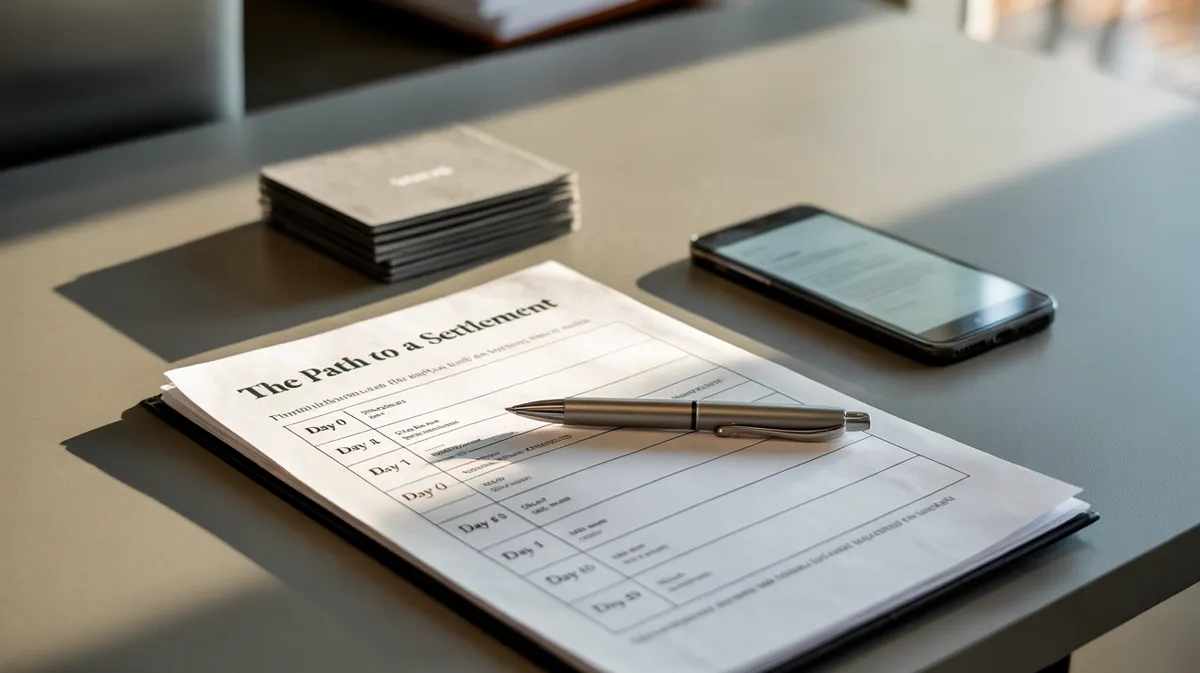
Answer the Phone
This feels counter-intuitive. You want to ignore them. But you cannot sue a ghost. You need to pick up, ask for the company name, and ask why they are calling. If they refuse to identify themselves, that is often a violation in itself.
Revoke Consent Clearly
State this exact phrase: "Stop calling me." Do not be polite. Do not negotiate. Say those three words and hang up. This creates a legal "line in the sand." Every call after this moment is potentially worth $500 to $1,500.
Screenshot Your Call Log
Phone carriers often delete call history after a few months. Take screenshots immediately. If they call your employer, document that too—calling you at work after being told to stop is a major violation.
Label the Contact "Harasser"
Save their number in your phone as "Harasser" or "Do Not Answer." This prevents you from accidentally picking up later, but more importantly, it groups all their incoming calls into a single, easy-to-read list for your attorney.
Important: Do Not Just Block Them
Blocking prevents you from seeing how many times they violate the law. If you block them, we cannot prove they called 50 times. Let the calls come through to voicemail so we can count the violations and calculate your damages.
Once you have this evidence, contact us for a free case review. There is no obligation to hire us, but if you do, we handle everything. You can find more legal insights regarding evidence collection in our library, or check our Google reviews to see how we have helped others in your exact situation.
Warning: The Clock Is Ticking
Statute of Limitations Alert: The Law vs. Reality
Under the Telephone Consumer Protection Act (TCPA), you generally have four years to file a lawsuit (28 U.S.C. § 1658). Do not rely on this timeline.
Waiting to act is the single biggest mistake victims make.
While the law allows four years, the evidence you need to win often disappears in less than two. Phone carriers like Verizon and T-Mobile are not required to keep call records forever; many purge this data after 18 months. Once those records are deleted, proving you received the calls becomes significantly harder.
Furthermore, illegal robocallers operate through shell companies that dissolve quickly to avoid liability. If you wait, the defendant may no longer exist by the time you file. We move fast to preserve evidence and freeze assets before they vanish. Securing a free case review creates no obligation, but it stops the clock on evidence destruction.
For more information on protecting your data, visit our legal insights page. If harassment has already impacted your financial records, we also have resources on disputing inaccurate credit reports.
The Federal Law That Protects You
The Telephone Consumer Protection Act (TCPA) is the primary federal weapon against illegal telemarketing and debt collection calls. Enacted by Congress under 47 U.S.C. § 227, this statute does not just suggest businesses should stop harassing you—it commands them to.
The law specifically targets the technology that makes mass harassment possible: the Automatic Telephone Dialing System (ATDS) and artificial or prerecorded voices. If you answer the phone and hear a distinct "click-pause" before a human speaks, or if you are greeted by a robotic message, the caller is likely using an ATDS. Under federal law, using this technology to call your cell phone without your permission is illegal.
When companies violate the TCPA, the financial penalties are severe. Congress designed these damages to punish corporations that treat illegal calls as a cost of doing business. You can recover:
- $500 per call for negligent violations (mistakes).
- $1,500 per call for willful violations (knowing/intentional acts).
The only valid defense a telemarketer or debt collector has is "prior express written consent." If you never gave them permission in writing, or if you explicitly told them to stop calling, they have no legal leg to stand on. This protection applies strictly to cell phones, though landlines also have protections against prerecorded sales calls.
While our primary focus here is stopping phone harassment, Hyslip Legal protects consumers from a variety of corporate abuses. Whether it is a collector calling the wrong person due to data errors similar to background check disputes, or an employer ignoring signs of a violation regarding workplace accommodations, we hold them accountable.
Legal vs. Illegal: Know the Difference
Not every annoying phone call is a lawsuit. But when companies use automated dialers to blast your cell phone without permission, they are breaking the law.
Federal law draws a sharp line between "nuisance" and "illegal." Scammers and overseas criminals will always ignore these rules, but legitimate US-based companies—banks, solar installers, car dealerships—must follow them. When they don't, they are liable for cash damages.
| Actionable Violations (We Sue) | Likely Legal Calls (We Don't) |
|---|---|
| Robocalls to Cell Phones: Any sales call using a pre-recorded voice or autodialer without your express written consent. | Political Calls: Surveys, polls, and campaign messages are generally exempt from the TCPA. |
| Revoked Consent: Calls that continue after you have told them to stop or opted out. | Emergency Alerts: Flight cancellations, school closings, or weather warnings. |
| DNC Violations: Sales calls received while your number is on the National Do Not Call Registry. | Pure Charity: Calls from non-profits asking for donations (unless they hire a for-profit telemarketer). |
The "Fake Consent" Trick
Many defendants claim they have the right to call you because you "signed up" online. In reality, they purchased your number from a shady "lead generator." These companies bury consent clauses in the terms and conditions of websites you may have visited once—or never at all. We know how to prove this consent is invalid.
Harassment at Work
Collectors and telemarketers often call places of employment to apply pressure. This is illegal if they know your employer prohibits such calls. Just as we hold companies accountable for employer liability in workplace harassment cases, we hold telemarketers accountable when they jeopardize your job.
Important: Criminals ignore the law. We cannot sue "Scam Likely" callers operating from overseas. We sue the legitimate US businesses that hire them to find customers.
If you are unsure whether your calls are actionable, get a free case review. There is no obligation to hire us, and we can quickly tell you if you have a claim worth pursuing.
How We Turn Harassment Into Compensation
Telemarketers and debt collectors often hide behind spoofed numbers, believing they are untouchable. We prove them wrong.
Our investigation team tracks down the real entity funding the illegal calls. We strip away their anonymity and file federal lawsuits to force compliance. While you might be tempted to just block the number, that doesn't stop them from calling from a new one. Litigation does. (For more on how this legal process works, see our guide on suing for spam text messages.)
We handle your case on a strictly contingency basis. You pay zero out-of-pocket fees. Our firm only gets paid if we recover money for you—either through a negotiated settlement or a court judgment. If we don't win, you owe us nothing.
Ready to fight back? Our process starts with a free [case review](/contact/). There is no cost and no obligation to move forward. Read our client reviews to see how we hold aggressive callers accountable.
Frequently Asked Questions
Can I sue if the caller ID says "Scam Likely" or I don't know the company's name?
Yes. You do not need to know the company’s legal name to start the process. Hyslip Legal uses advanced investigative tools to trace these numbers back to the source. We file lawsuits against "John Doe" defendants and subpoena records to unmask the real corporate entity behind the harassment. If they called you, we can find them.
How much money is a robocall lawsuit actually worth?
Under the Telephone Consumer Protection Act (TCPA), damages are fixed by federal statute. You are entitled to $500 per illegal call. If the court finds the company acted willfully—which they almost always do—that amount triples to $1,500 per call. These violations stack. If a debt collector robocalls you 20 times, the statutory damages could range from $10,000 to $30,000.
Does the National Do Not Call Registry actually work?
The Registry is a list, not a physical shield. Criminals and aggressive telemarketers often ignore it. However, being on the list gives you legal leverage. If your number has been on the National Do Not Call Registry for more than 31 days and you receive more than one solicitation call within a 12-month period, you can sue for additional damages.
Can debt collectors call me at work if my employer forbids it?
No. Once you tell a debt collector that your employer prohibits personal calls, they must stop immediately. Continuing to call your workplace after being told to stop is a violation of the Fair Debt Collection Practices Act (FDCPA). This creates a separate claim for damages on top of the robocall violations.
What counts as "revoking consent" to be called?
You can revoke consent in any reasonable way. Saying "stop calling me," "remove me from your list," or "wrong number" is sufficient. You do not need to send a certified letter or fill out a specific form. Once you verbally revoke consent, any subsequent autodialed call is illegal.
How do I get help now without paying upfront legal fees?
Consumer protection laws force the defendant to pay your legal bills. Our firm operates on a contingency fee basis. We only get paid if we recover money for you. If we don't win, you owe us nothing. There is no financial risk to enforce your rights.