
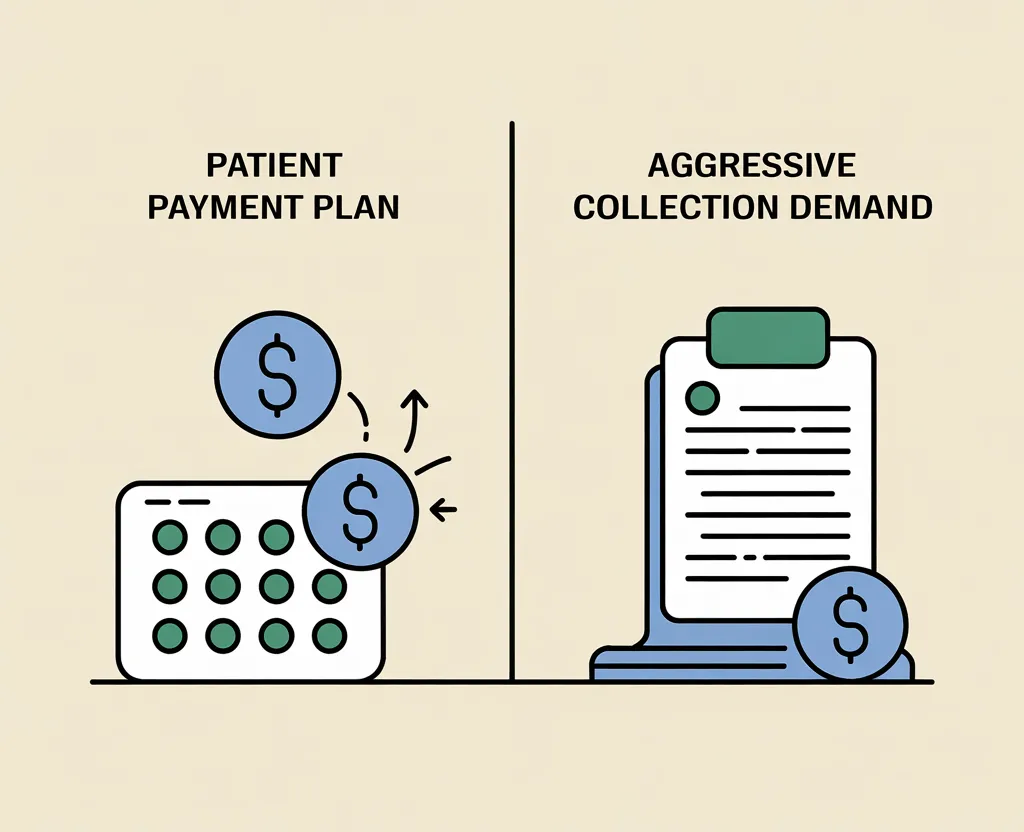
You set up a payment plan with the hospital. You have been making payments every month -- on time, exactly what you agreed to. Then a collection agency calls demanding the full balance. Nobody told you the account was being reassigned. Nobody from the hospital contacted you to say the payment plan was being terminated. And now a stranger is threatening consequences if you do not pay everything at once.
This is one of the most common and most infuriating patterns in medical debt collection. And it can create serious legal problems.

In This Guide
The Payment Plan Problem
Hospitals routinely set up payment plans with patients. Sometimes these arrangements are formal -- documented in writing with a specific monthly amount and duration. Sometimes they are informal -- a patient service representative telling you over the phone that you can pay $100 a month and that will be fine. The distinction matters.
A written payment agreement is a contract. If the hospital accepted your payments under the terms of that agreement and then assigned the debt to a collector while you were in compliance, they may have breached that contract. That does not automatically create an FDCPA claim against the hospital itself -- hospitals collecting their own debts are generally not covered by the FDCPA. But the third-party collector who takes over is covered. And the way that collector handles the account determines whether federal law has been violated.
Where the FDCPA Violations Start
When a collection agency takes over a medical account, several things must happen. The collector must send a written validation notice under 15 U.S.C. § 1692g within five days of initial contact. That notice must accurately state the amount of the debt, the name of the creditor, and your right to dispute the debt within 30 days.
Here is where the violations pile up. The collector demands the full balance without acknowledging the existing payment arrangement -- that may violate § 1692e by misrepresenting the character or legal status of the debt. The collector tells you that the hospital "cancelled" your payment plan when it did not -- that is a false representation under § 1692e(2)(A). The collector adds collection fees or inflated interest not authorized by the original agreement -- that violates § 1692f(1) prohibiting unfair collection of amounts not expressly authorized. The collector threatens to sue you for the full amount when litigation is not actually intended -- that violates § 1692e(5).
Each violation is independently actionable. When they stack, the collector's exposure compounds.
The Insurance Processing Gap
Many payment plan disruptions happen because insurance processing takes months. A patient sets up a plan based on what they believe they owe. Three months later, the insurance company processes the claim differently than expected -- paying more, paying less, or denying coverage entirely. The hospital system recalculates the balance, the account gets flagged as delinquent despite active payments, and it gets dumped to collections before anyone reconciles the numbers.
The patient did nothing wrong. The system failed. But the collector does not care about the system -- they care about the balance on the screen in front of them. And when they collect on an amount that is wrong because insurance was not properly applied, that is an FDCPA violation.
Illinois Hospital Collection Requirements
Illinois law imposes specific obligations on hospitals before outside collection can begin against eligible uninsured patients. Under the Fair Patient Billing Act, hospitals must provide billing information, screen for financial assistance, offer a reasonable payment plan, and wait the required period before assigning an unpaid bill to a collection agency. Separate Illinois uninsured-patient protections can also limit what some hospitals may collect from qualifying uninsured patients.
If a hospital skipped any of these steps before shipping your account to a collector, that can undermine the foundation of the collection effort. While these are state-law obligations that may not automatically create FDCPA claims, they can matter when the collector is trying to enforce a balance that was not handled correctly in the first place.
What You Should Do
Do not stop making payments without a plan. If you stop paying and the collector later argues you abandoned the arrangement, it weakens your position. Instead, continue your existing payments while you take the following steps.
Send the collector a written debt validation request under § 1692g within 30 days of their first contact. Request a complete copy of the original billing statement and any payment plan agreement from the hospital. Compare the collector's claimed balance against your payment records and insurance explanation of benefits. If the numbers do not match or the collector's behavior was improper, you may have a federal claim.
For a step-by-step guide on sending a validation letter, read our Debt Validation Letter: Step-by-Step FDCPA §1692g Guide.
No Cost to You
The FDCPA is a fee-shifting statute. Under 15 U.S.C. § 1692k, the debt collector pays your attorney's fees if your case is successful. You pay nothing upfront. You pay nothing out of pocket. That is how the law was designed -- to ensure that a medical patient facing a $3,000 collection call can access the same legal firepower as a corporation.
If a hospital sent your bill to collections while you were making payments, contact Hyslip Legal for a free case review. We will review the facts, check the collector's compliance, and tell you whether you have a case. The consultation costs nothing. And if we take your case, neither does the representation.
Related Reading
- A Medical Bill Went to Collections Without Warning. Now What?
- Medical Debt on Your Credit Report: What Changed, What Didn't, and What You Can Do About It
- Debt Collector Calling About a Medical Bill Insurance Was Supposed to Pay
- Can Medical Debt Collectors Garnish My Wages in Illinois?
- Emergency Room Bill I Never Agreed To Went to Collections
- Medical Debt After a Loved One Dies: Can Collectors Come After the Family?
This information is for educational purposes only and does not create an attorney-client relationship with Hyslip Legal, LLC. Legal outcomes depend on the facts of each case.